
Pre-clinical PET Imaging System Case Study
Building on the success of previous MRI development programmes, this project involved the design and development of a portable pre-clinical PET imaging system to enable multi-modality imaging alongside existing MRI platforms. Working within a multidisciplinary team of physicists, electronics engineers and software specialists, I was responsible for the mechanical design and engineering of the PET unit, developing a compact, robust and serviceable product suitable for demanding laboratory environments.
Project Overview
The objective was to create a removable PET imaging module that could be quickly attached to, and detached from, an MRI system while maintaining the precision, stability and reliability required for high-quality medical imaging.
The Challenge
Designing a portable PET imaging system presented several significant engineering challenges. The unit needed to be compact and light enough for operators to install and remove safely, while housing highly sensitive detector arrays that required exceptional positional accuracy and protection from vibration.
Thermal management was equally critical. The imaging sensors relied on precise temperature control to maintain performance, requiring an efficient cooling solution that avoided the complexity of conventional refrigeration systems while preserving the compact form factor. The device also needed to integrate seamlessly with existing MRI equipment, allowing secure attachment during operation while enabling rapid removal for servicing or transportation.
Engineering & Development
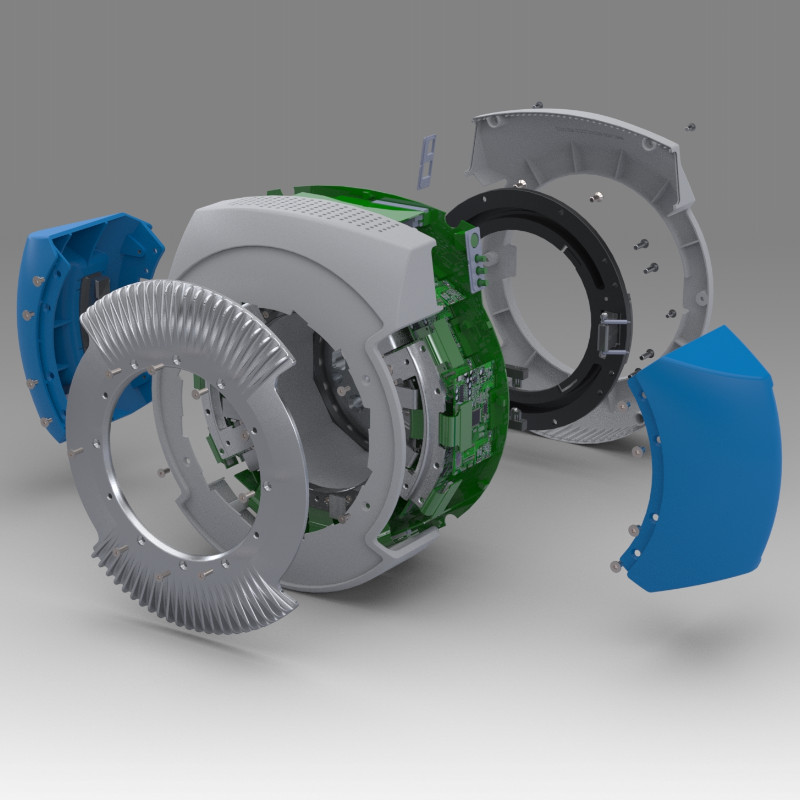
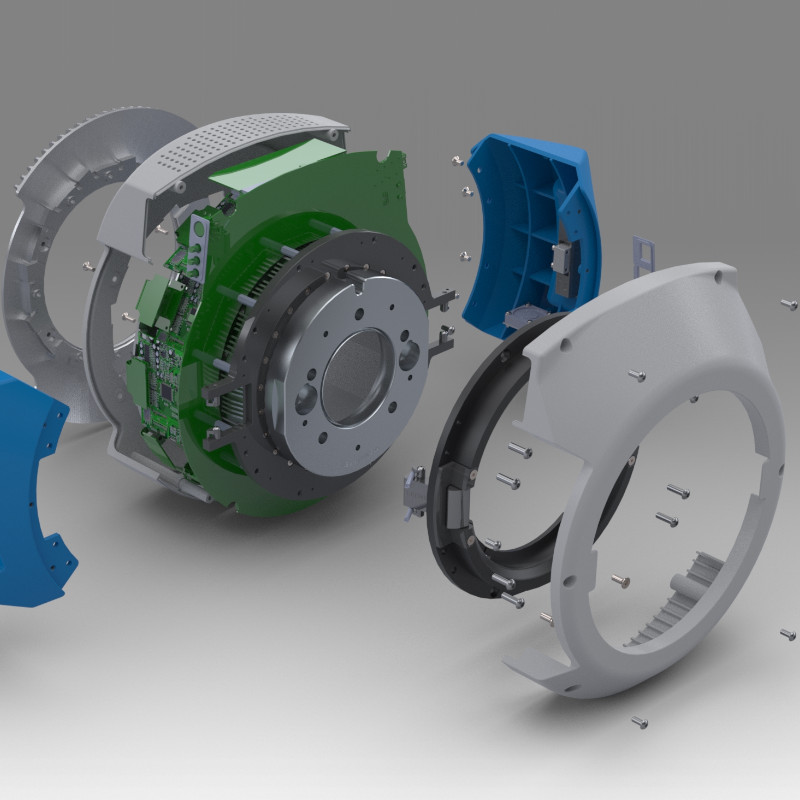
The detector arrays incorporated high-clarity scintillation crystals positioned in front of sensitive optical sensors, suspended within optically clear gel to maximise imaging performance. To achieve the required manufacturing tolerances and improve serviceability, I developed a modular cradle system that housed individual detector arrays. This replaced an earlier monolithic design, significantly improving dimensional control while allowing individual modules to be replaced without dismantling the entire assembly.
Thermal stability was achieved using an array of Peltier cooling modules positioned around each detector assembly, providing compact and efficient temperature regulation. The cooling strategy evolved during development, with forced-air cooling initially employed before the introduction of a large aluminium heatsink integrated into the front of the enclosure. This not only improved thermal performance but also complemented the product's industrial design language.
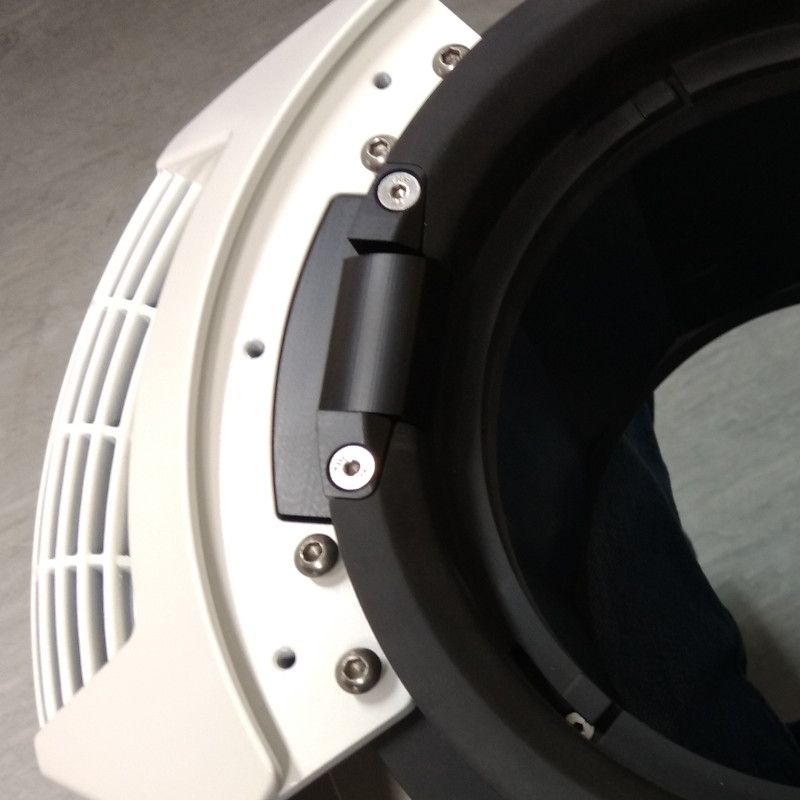
To support safe handling, I designed a robust mechanical docking mechanism that allowed the PET module to be securely mounted onto the MRI platform. A dual-action release system required both rear-mounted release buttons to be operated while simultaneously supporting the integrated handles, significantly reducing the risk of accidental release or damage to the equipment.
Outcome
The completed PET imaging system successfully delivered a compact, portable and visually distinctive solution that complemented the existing MRI product range while enabling advanced multi-modality imaging capabilities. The modular architecture improved manufacturability, simplified maintenance and enhanced long-term reliability, while the carefully engineered handling and docking mechanisms provided a safe and intuitive user experience.
The project demonstrated the successful integration of precision mechanical engineering, thermal management, manufacturability and user-centred design within a highly specialised medical imaging application, contributing to the continued expansion of the client's pre-clinical imaging portfolio.
Further information about MR Solutions and their technology can be found on the MR Solutions website.