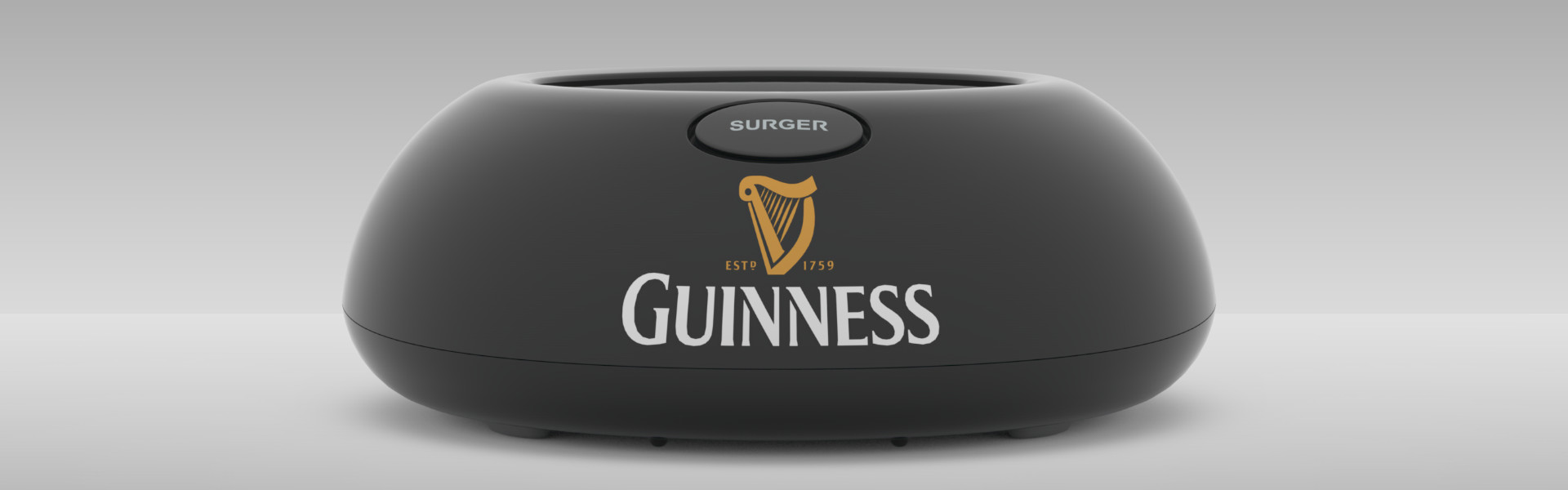
Guinness Beer Surging Device Case Study
This project was undertaken in collaboration with Firsthand Design, a product design consultancy commissioned by Diageo to develop a consumer device capable of recreating the signature Guinness surging effect at home. Working as the mechanical design engineer, I was responsible for engineering the product from the industrial design concepts produced by Firsthand Design, transforming the proposed form into a robust, manufacturable electromechanical product suitable for high-volume production.
Project Overview
Originally developed as a promotional retail product for supermarkets, the concept was later expanded into a larger commercial version for use in bars and pubs. My role focused on the mechanical architecture, component engineering, sealing, ultrasonic transducer integration and design for manufacture (DFM), ensuring the product could be manufactured reliably while delivering the required performance.
The Challenge
Developing a compact ultrasonic consumer product presented several unique engineering challenges. Efficient transfer of ultrasonic energy depended upon maintaining effective coupling between the transducer and the base of the glass, requiring careful consideration of component mounting, sealing and structural design.
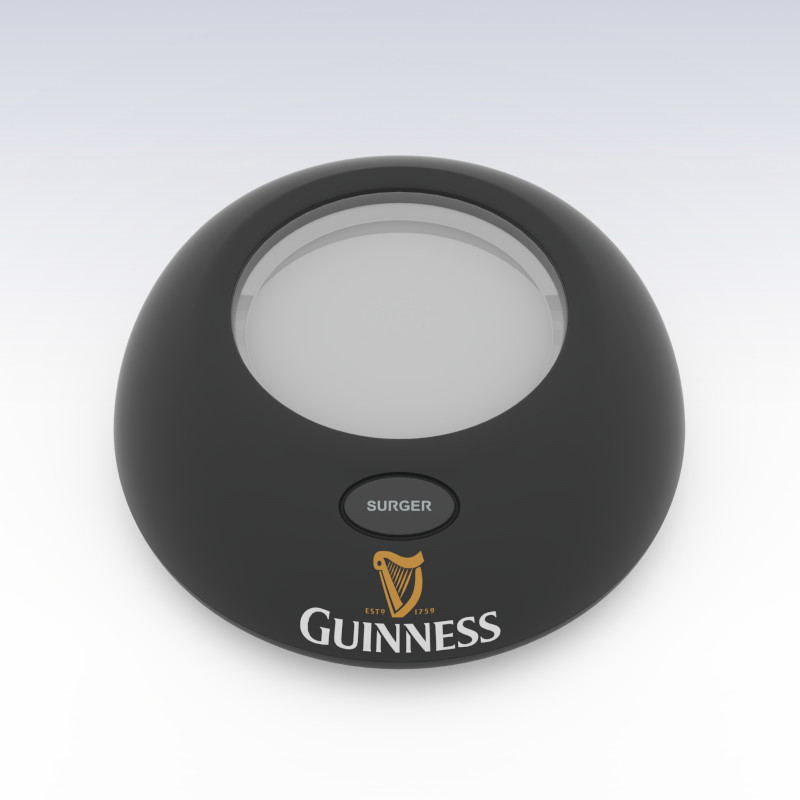
For the domestic product, users applied a small amount of water to the ultrasonic plate to improve energy transfer, meaning the enclosure needed to be fully sealed against water ingress while remaining simple and economical to manufacture. The design also had to withstand repeated use without compromising the performance of the ultrasonic transducer, whose effectiveness was highly dependent on the clamping forces and surrounding enclosure geometry.
Engineering & Development
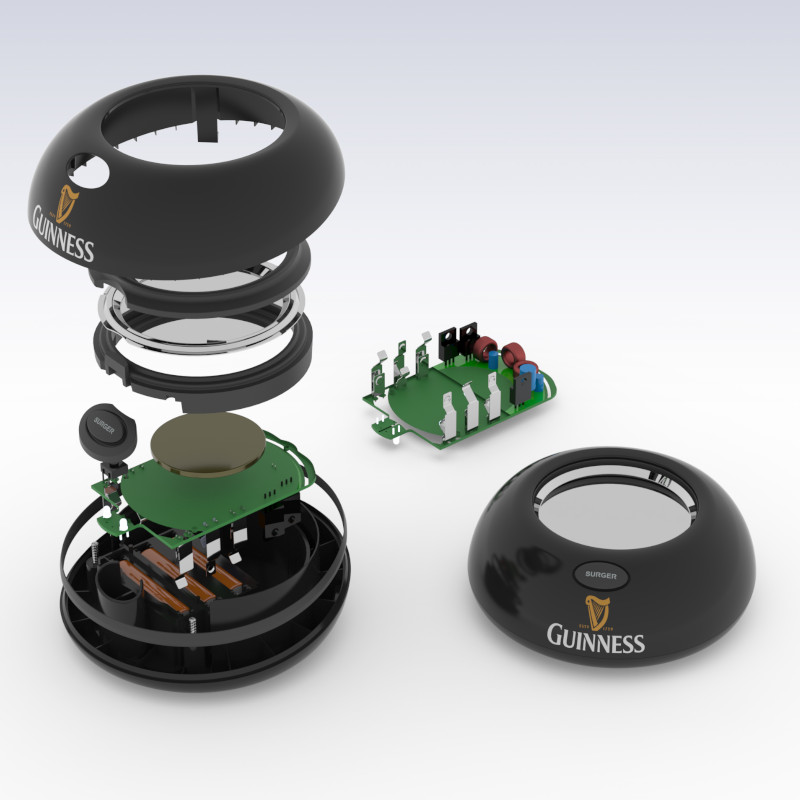
A significant focus of the project was achieving an efficient, high-volume manufacturing solution without compromising product performance. Early enclosure concepts utilised snap-fit construction; however, development testing demonstrated that a conventional screw-fastened assembly provided superior sealing performance and more consistent compression of the internal components.
Particular attention was given to the mounting of the ultrasonic transducer, which required precise support while allowing sufficient mechanical compliance to maximise energy transmission. Custom elastomer sealing gaskets were developed to provide both waterproofing and controlled mechanical isolation of the transducer assembly.
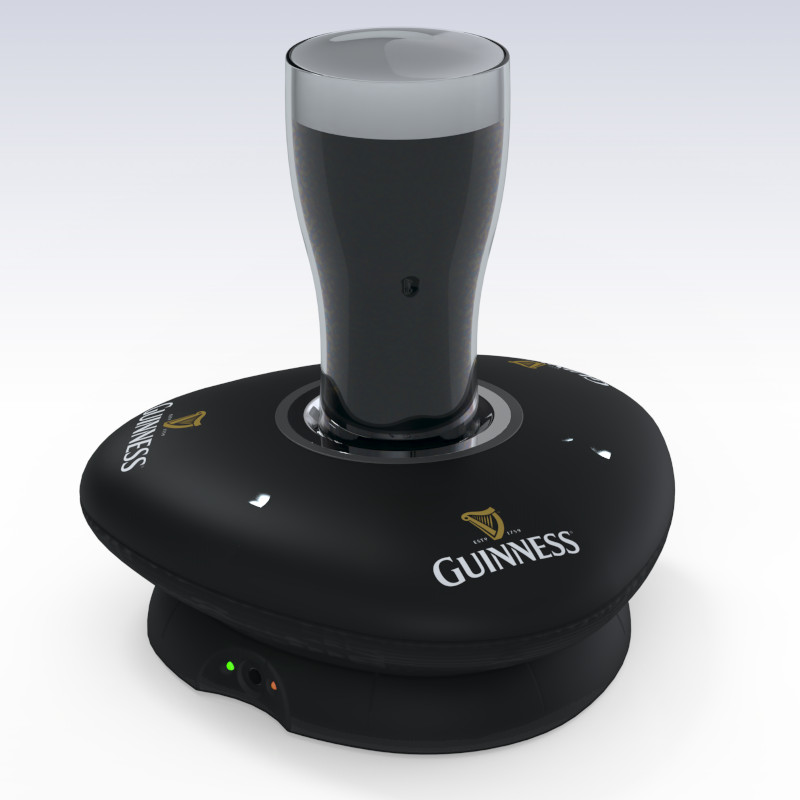
The original concept incorporated battery power, but ongoing evaluation identified limitations relating to battery replacement, sealing and long-term usability. The consumer product was therefore redesigned to utilise an external mains power supply, simplifying the enclosure while improving reliability. The larger commercial version incorporated additional functionality including a rechargeable power system, automatic water dispensing and an illuminated lighting sequence to enhance the overall user experience.
Outcome
The finished product represented an innovative consumer appliance that successfully recreated the iconic Guinness surging effect within the home. The device was launched through major UK supermarkets alongside specially developed Guinness cans, providing consumers with a unique way to enjoy draught-style Guinness outside the pub environment.
The project demonstrated the successful integration of ultrasonic technology, electromechanical engineering, waterproof enclosure design and design for manufacture to produce a distinctive high-volume consumer product. The subsequent development of a commercial version further demonstrated the scalability of the original concept and its successful adaptation for professional hospitality environments.