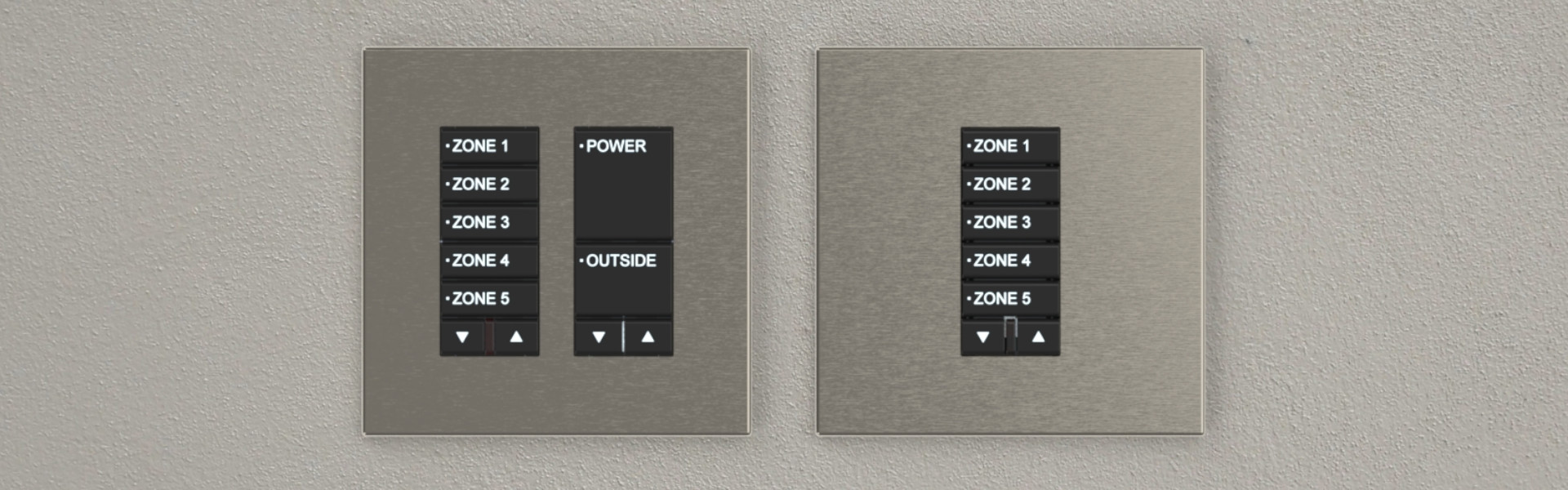
Modular Lighting Controller Case Study
Cooper Controls required the development of a premium lighting controller that could be configured to meet the requirements of multiple customers while maintaining a common product platform. Working independently in a consultancy capacity, I was responsible for the complete mechanical design and engineering of the product, taking it from initial concepts through to production-ready detail design, including manufacturing documentation and tooling drawings.
Project Overview
The project demanded a solution that combined elegant industrial design with robust engineering, resulting in a highly configurable product suitable for high-end residential and commercial environments.
The Challenge
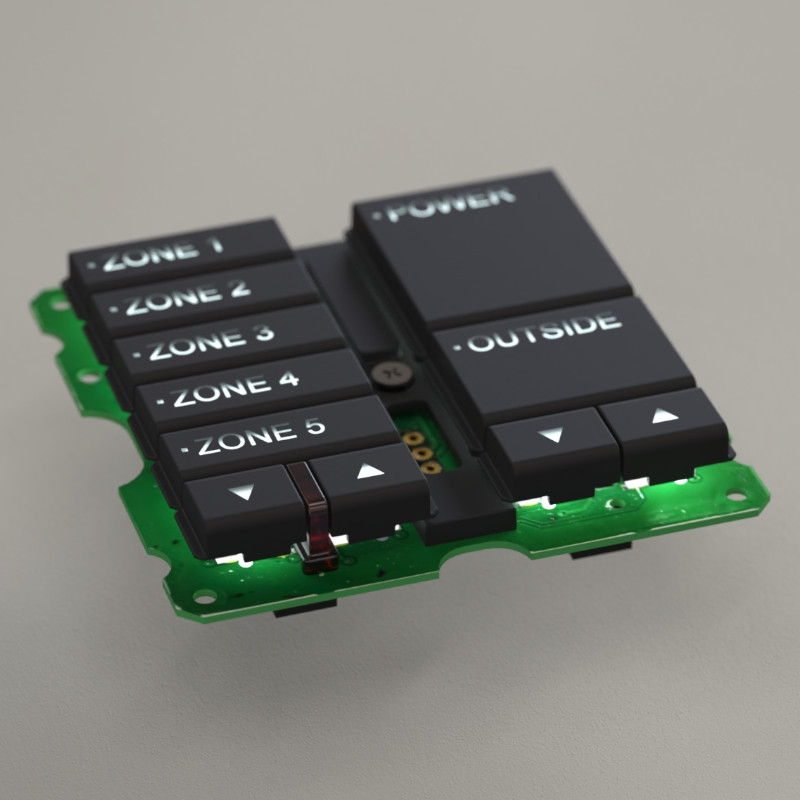
A key design objective was to achieve an exceptionally slim form factor capable of fitting within a slim 15mm back box. This presented significant engineering challenges, as the enclosure needed to accommodate a microprocessor-controlled PCB, illuminated push buttons, light guides and associated mechanical components without compromising reliability or ease of assembly.
Equally important was the tactile user experience. Unlike touch-sensitive interfaces, the product was required to provide positive mechanical feedback, giving users the reassurance of a distinct switch action while retaining a refined, contemporary appearance.
Engineering & Development
Drawing on my experience designing keypad technologies and optical light-guide systems, I developed a compact modular architecture that could be configured to suit a wide range of customer requirements while minimising manufacturing complexity.
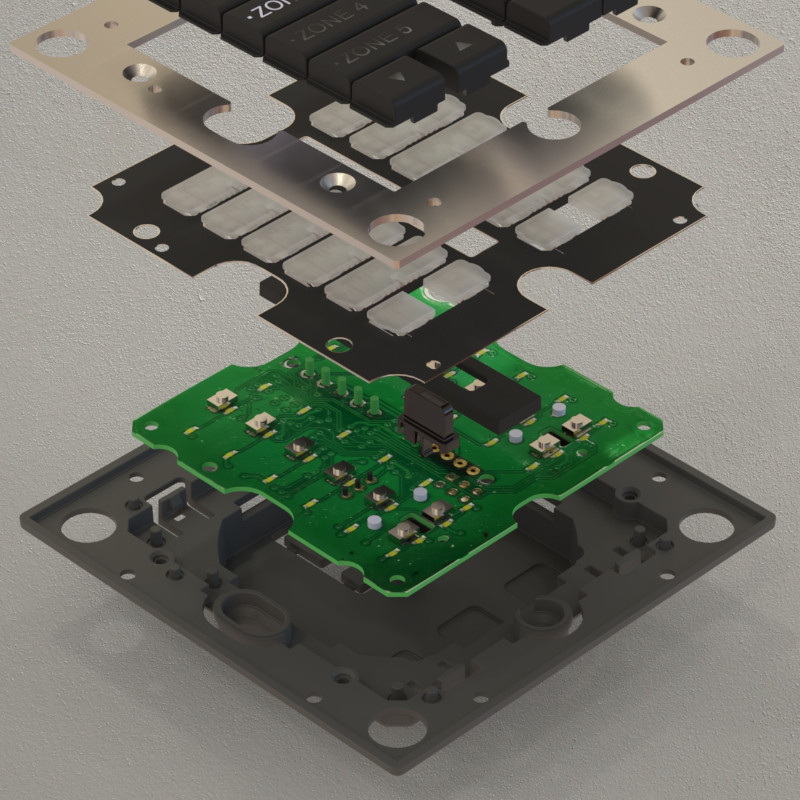
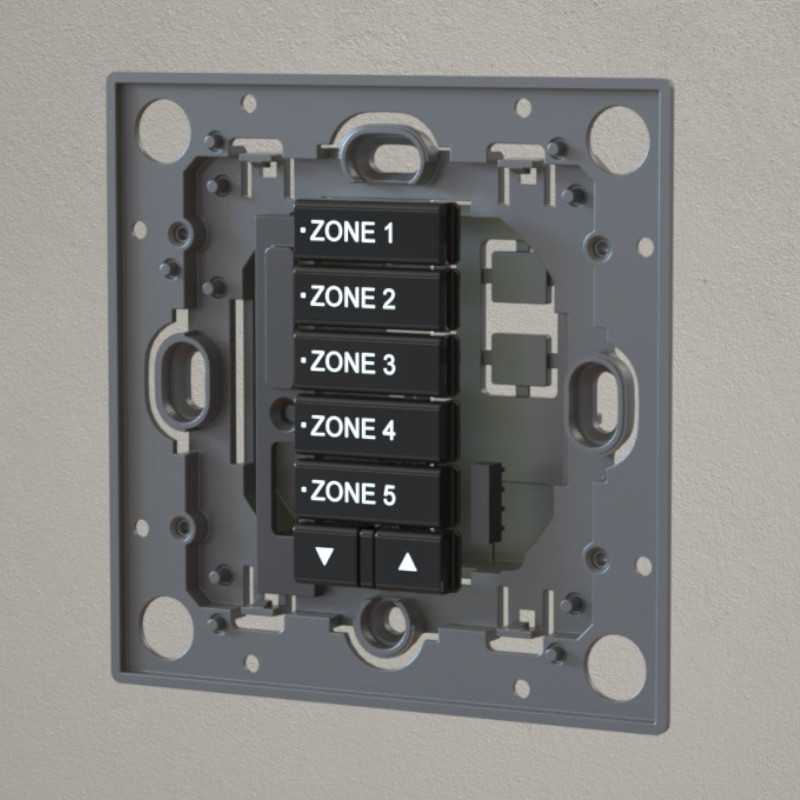
The electronic architecture was designed around a standardised PCB layout, requiring only two board variants to support both single and dual gang products. Mechanical components, including the button assemblies and light guides, were engineered as clip-fit modules mounted within a removable internal framework. This approach simplified assembly, reduced tooling requirements and enabled rapid reconfiguration during manufacture and installation.
Throughout the project, careful consideration was given to manufacturability, component tolerances, assembly efficiency and long-term product reliability, ensuring the design was suitable for volume production.
Outcome
The completed lighting controller successfully combined premium aesthetics with practical engineering and flexible product configuration. The modular design reduced manufacturing complexity while allowing a broad range of customised switch layouts to be produced from a common platform. The result was a high-quality lighting controller that delivered an intuitive tactile user experience and met the demanding expectations of both residential and commercial applications.