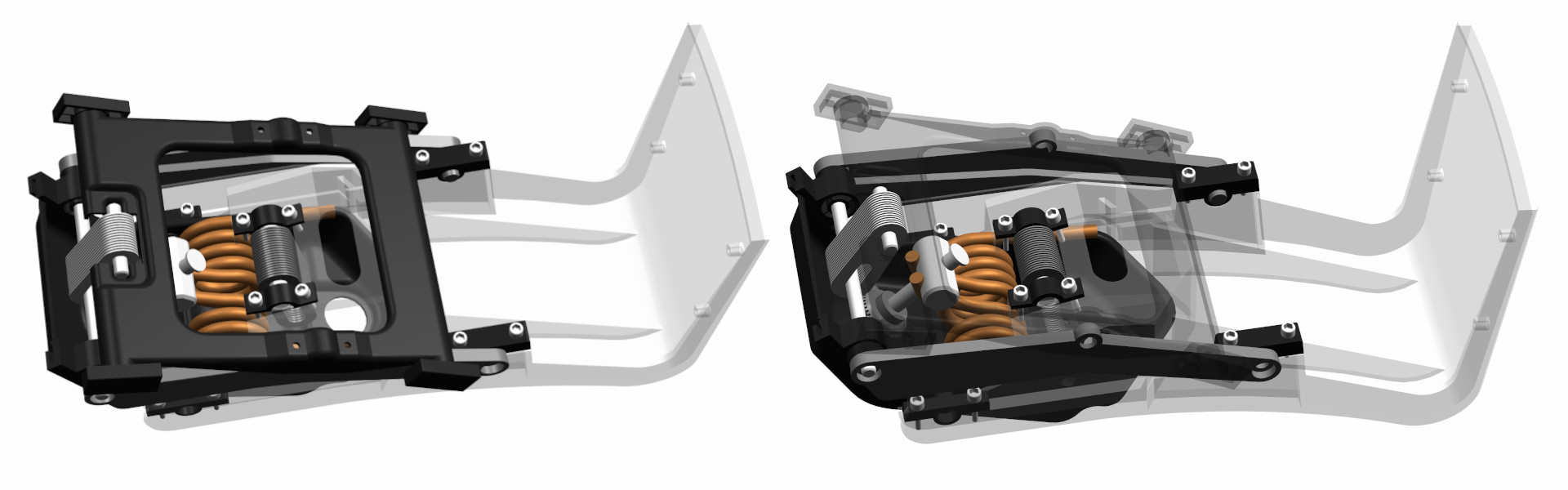
Ergonomic Premium Office Chair - EFG Milagro
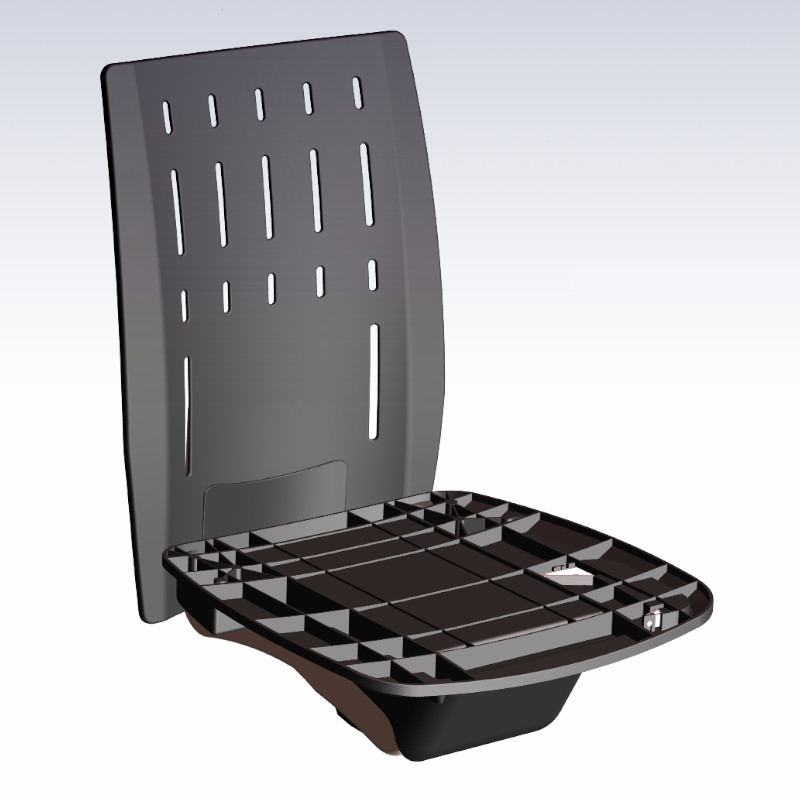
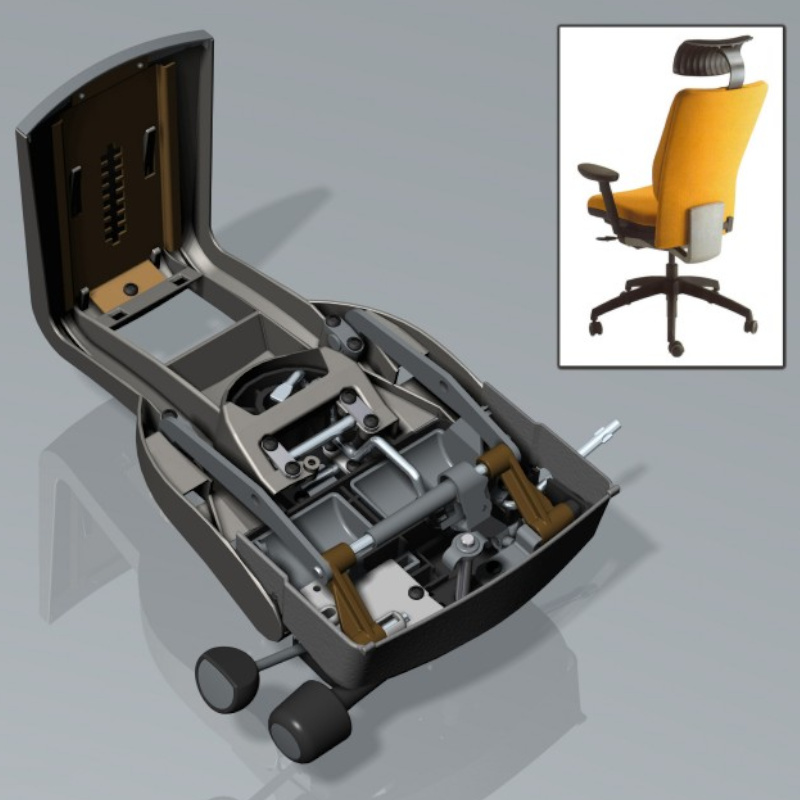
The Milagro office chair was developed as part of a two-year product development programme undertaken by Taylor Design Consultants for European Furniture Group (EFG). Working within an engineering team of just two, I contributed to the mechanical design and development of a premium ergonomic office chair, supporting the project from concept through to production.
Project Overview
As one of my earliest commercial engineering projects following graduation, the programme provided extensive experience in mechanism design, component detailing, design for manufacture and collaboration with suppliers. Throughout the development, we worked closely with EFG's headquarters in Sweden and a number of specialist tooling manufacturers to refine the design and prepare it for large-scale production.
The objective was to develop a premium ergonomic office chair offering superior comfort, adjustability and long-term durability while delivering the refined feel expected of a high-end seating product. My responsibilities evolved throughout the project, beginning with mechanical assemblies and layout development before progressing to the detailed engineering of production components, including injection mouldings, sheet metal pressings, pressure die-castings and CNC-machined parts.
The Challenge
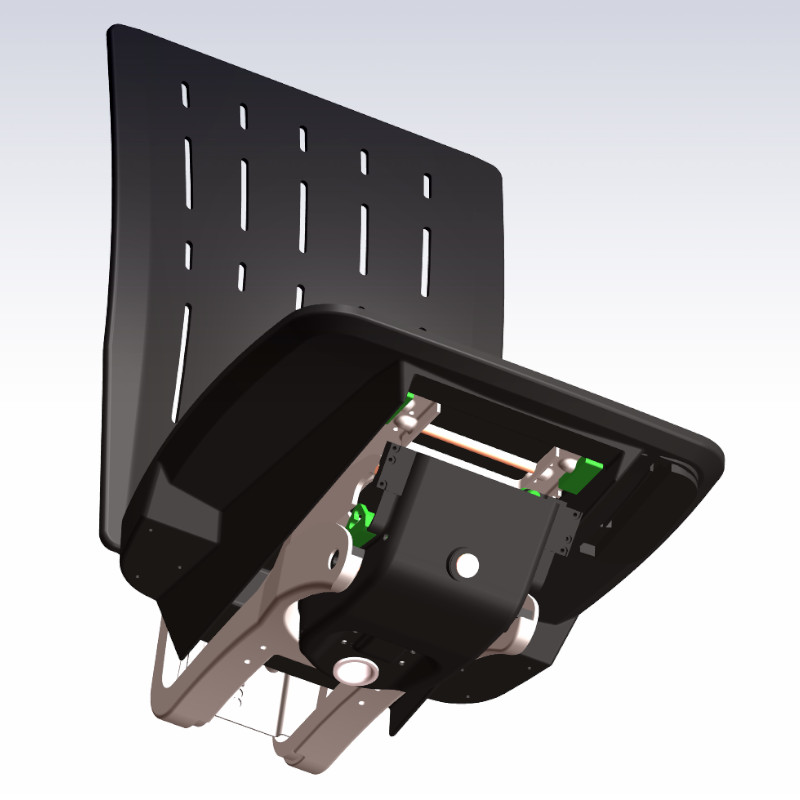
A key objective was to improve user comfort by reducing pressure beneath the thighs during recline. Conventional office chairs typically employ a synchronous mechanism in which the seat and backrest pivot together. Through ergonomic studies and prototype testing, we investigated an asynchronous mechanism that allowed the seat to drop slightly at the front as the backrest reclined, reducing pressure beneath the legs while providing improved support throughout the seating position.
The chair also required comprehensive adjustment features, including recline tension adjustment, independent backrest positioning and smooth, quiet operation. Achieving a premium user experience meant eliminating unwanted noise, backlash and harsh engagement while ensuring the mechanism remained robust enough for many years of daily commercial use.
Engineering & Development
Prototype rigs were developed to evaluate alternative linkage geometries and spring characteristics before establishing the final asynchronous "Syncro" mechanism used in production. Careful optimisation of the pivot locations and spring system enabled consistent ergonomic performance across a broad range of user weights while maintaining smooth and predictable movement.
To provide virtually infinite position adjustment, the locking mechanism utilised an innovative clutch plate system. By clamping multiple friction plates together, the mechanism could securely withstand high operating loads without relying on traditional pin-and-hole indexing systems, resulting in significantly smoother adjustment and a more refined user experience.
Alongside mechanism development, I contributed to the detailed engineering of production components across multiple manufacturing processes, including injection moulding, sheet metal fabrication, pressure die-casting and CNC machining. Continuous design refinement focused on simplifying components, reducing fastener count, improving assembly efficiency and lowering manufacturing costs without compromising product quality or durability.
Outcome
The Milagro office chair successfully combined ergonomic innovation with high-quality mechanical engineering to deliver a premium seating solution that achieved commercial success in international markets. Its refined operation, extensive adjustability and robust construction helped establish it as a successful long-term product, with updated versions continuing to be sold more than twenty-five years after its original launch.
The project provided invaluable experience in mechanism design, ergonomic product development, design for manufacture and multidisciplinary engineering, laying the foundations for many of the product development principles that have continued throughout my engineering career.