Pre-Clinical PET & CT Imaging System Design Case Study
MR Solutions commissioned the development of a new pre-clinical imaging platform combining high-resolution Computed Tomography (CT) with one of their existing Positron Emission Tomography (PET) systems. Having previously led the mechanical development of several PET and MRI products for the company, I was invited to design the complete CT subsystem, integrating precision linear and rotary motion stages, a high-energy X-ray source, detector assembly, and a fully shielded enclosure capable of supporting multi-modality imaging.
Project Overview
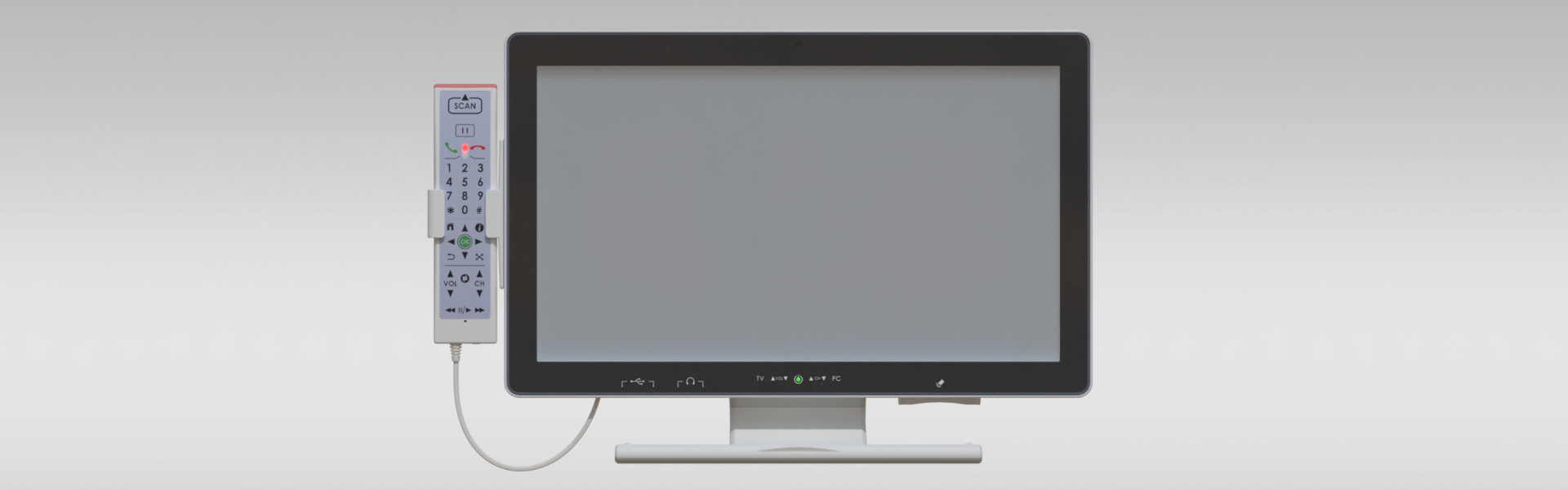
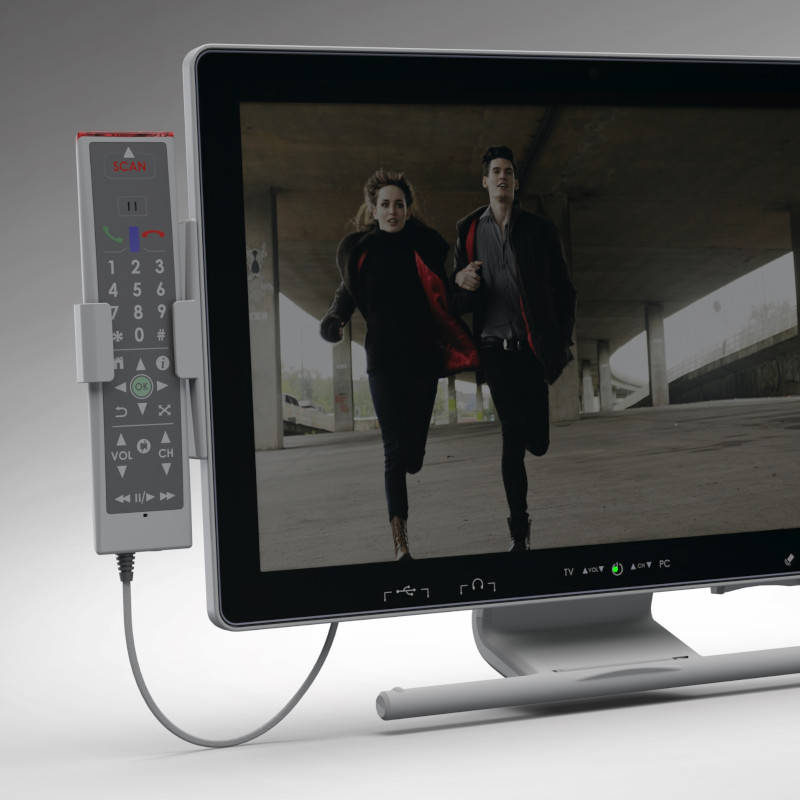
Developed in collaboration with a multidisciplinary engineering team based in the UK and Taiwan, the system incorporated a custom electronics platform, touchscreen interface and multiple input/output options, all packaged within an enclosure designed to achieve an IP65-rated front face suitable for demanding healthcare environments.
The objective was to create a family of patient entertainment terminals that combined a modern appearance with exceptional durability, ease of cleaning and manufacturing efficiency. The design needed to accommodate various display sizes and optional peripheral configurations while minimising tooling changes between product variants.
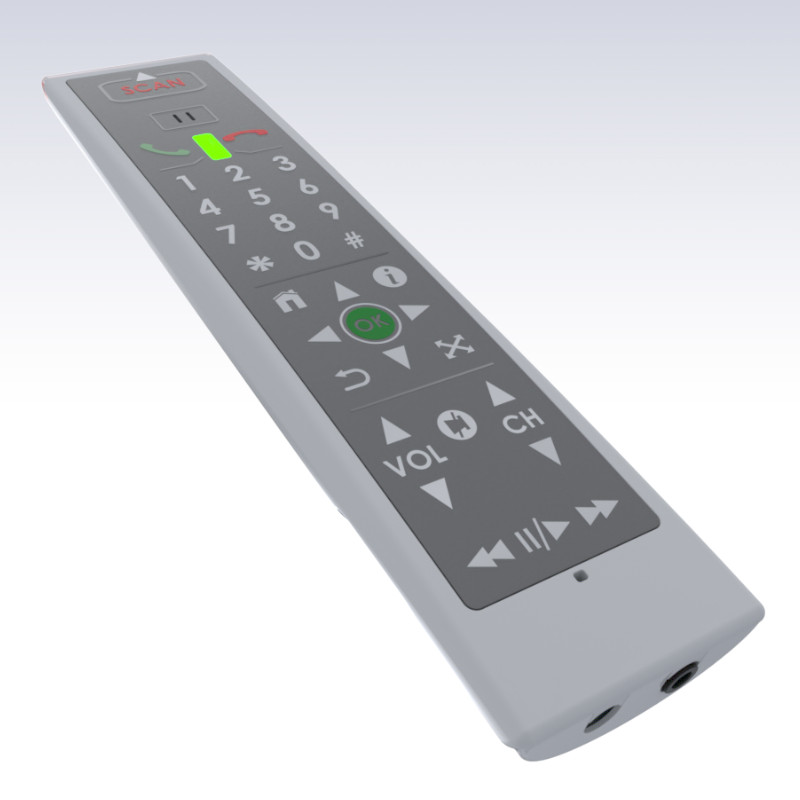
Alongside the display unit, I designed a complementary remote-control handset that shared the same design language and integrated seamlessly with the overall product range.
The Challenge
Healthcare environments demand products that are both robust and easy to disinfect. One of the primary design objectives was therefore to eliminate exposed fasteners and minimise dirt traps by creating smooth external surfaces with minimal visible joints.
Achieving this while maintaining adequate ventilation presented a significant engineering challenge. The enclosure also needed to support a touchscreen, integrate numerous hardware interfaces and mount securely to an articulated support arm without introducing excessive weight or structural distortion. In addition, the platform had to remain scalable, allowing multiple screen sizes to be developed using a common mechanical architecture.
Engineering & Development
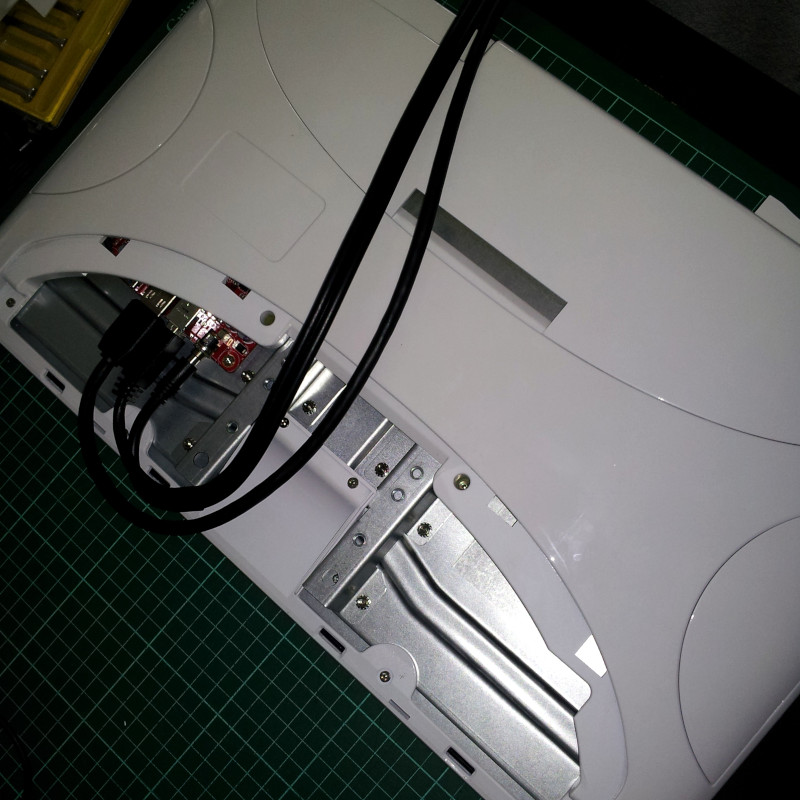
The enclosure was engineered around a structural internal chassis that provided rigidity while distributing loads from the articulated mounting arm, preventing deformation of the outer housing during use. This architecture enabled straightforward scaling to accommodate different display sizes while maintaining a consistent product appearance.
To preserve the clean aesthetic and improve hygiene, the enclosure utilised an innovative snap-fit assembly with concealed release features. Small access points were discreetly positioned around the perimeter, allowing service personnel to disengage internal clips using a dedicated release tool without compromising the appearance or environmental sealing of the product.
Ventilation was carefully integrated into the enclosure design to provide effective cooling while maintaining the IP65-rated front surface and minimising areas where contaminants could accumulate. I also designed a matching remote-control handset incorporating an infrared receiver and developed an integrated carrying handle within the terminal enclosure that doubled as a convenient storage point for headsets and other accessories, enhancing both usability and visual simplicity.
Outcome
The completed design provided a versatile and highly manufacturable family of patient entertainment terminals that combined a robust healthcare-focused design with a clean, contemporary appearance. The scalable platform enabled multiple product variants to be produced efficiently, while the concealed assembly methods, integrated features and hygienic design supported both long-term reliability and ease of maintenance.
The products progressed successfully into production, with tooling manufactured in Taiwan to support the creation of a complete family of display units, demonstrating the effectiveness of the scalable mechanical architecture and design-for-manufacture approach.